Showing posts sorted by date for query Outsider test for faith. Sort by relevance Show all posts

September 29, 2025

Richard Swinburne On the Need For Corroborated Testimony


I went to a philosophical conference two weeks ago which highlighted the work of Paul Draper at Purdue. It was really informative. I got to meet up with some important philosophers, like Paul himself, Michael Bergmann (who accepted a free copy of "The Outsider Test for Faith"), James Sterba, (pictured with me), and Graham Oppy (via Zoom), plus a bunch of cool informed younger philosophers. The highly esteemed Richard Swinburne (back of head pictured !!) was there. I got into a discussion with him which I found interesting. When I described what evidence reasonable people need to believe, he said "you can't have that!"

Afterward I initiated that same discussion via email:

May 28, 2025

"David Hume and the Logical Case Against Miracles" is Excellent!

This is an excellent video! I highly recommend it on David Hume’s Part 1 argument against miracles. It looks like my arguments on behalf of the outsider test for faith are included. It cuts to the chase.


Now consider my discussion below. I think I came up with a new take on miracles!

April 17, 2025

Evangelical Apologist Daniel Ray Objects To Atheism, Part 1

It's not unusual for apologists to argue with me. But I have met and talked with Daniel Ray and his objections are real. I'll let him introduce his 3-Part blog post series (so far) that objects to several of my arguments:
Recently I had the delightful opportunity to sit down to breakfast with the formidable atheist internet infidel and prolific author John W. Loftus. John came down to Texas for a visit recently and our ministry, Watchman Fellowship, invited John to participate in our Atheist & Christian Book Club. John is a good friend of our ministry’s president James K. Walker and has been on our book club as a guest at least three times, if memory serves me correctly.

Let me say up front that John is truly a gentleman and likable fellow. He was both thoughtful and respectful throughout our conversation about faith, epistemology, and several other topics pertaining to atheism and Christianity. You might disagree with John’s conclusions about God and Christianity, but one thing you cannot say of John is that he hasn’t thought much about why he no longer believes in God. We even spent some time discussing Latter-day Saint beliefs and my recent trip to Utah for the LDS spring General Conference. John asked me all about how I approach engagement with Mormons in Utah. And he listened. He wasn’t just pontificating atheism over hash browns and coffee, John genuinely seemed interested in why I believe Christianity is true.

One thing any engagement with John’s work will do for you is to make you check yourself as to whether or not you are just “parroting” your beliefs or if you really have examined and looked into them and have sound epistemological reasons for holding to your belief. John knows the Bible rather well, knows a lot of apologetic arguments for Christianity and was once a student of Christian philosopher William Lane Craig.

As an atheist, John has popularized the “Outsider Test for Faith” which you can find here. It is a test that has unfortunately caused not a little trouble for some folks who haven’t really examined the epistemological side of their faith in God. “How do you know what you claim to know?” If you have never examined that aspect of your beliefs, it can be a little intimidating, especially if you’re confronted by an atheist on the street who asks you this question.

And I can attest, that even though John might disagree with your conclusions if you are a Christian, he will respect your answers to his questions if you can demonstrate you have thought about why you believe what you believe.

John asked me over breakfast to check out some of his essays on The Secular Web. Since we chatted briefly about Mary, I thought I would have a go at responding to some of John’s points in his 9,000-plus-word essay on why he thinks Mary cannot be the mother of Jesus.

I don’t here claim I’ll be able to do justice to everything John mentions in the essay, and this may end up being a couple of posts, but this is why I like to write. I often have no idea where I’ll end up!
Below is a link to Part 1, plus our comments back and forth. As usual, there isn't enough time to comment on everything, or in great detail. Check it out and make your own observations.

March 07, 2025

With So Many Flat Tires, How Does Christianity Keep On Going?

Apologists specialize in claiming the tires aren’t flat at all


I can think of at least six Christian tires that have been totally, permanently destroyed. They will be flat forever.  
 
(1)  God is good, loving, and all powerful. Horrendous human and animal suffering—ongoing for millennia—provide abundant evidence that this claim is feeble, indeed ridiculous.
 
(2)  The resurrection of Jesus, that is, god raised Jesus from the dead, thereby rescuing humans—those who believe in it—from eternal punishment. Yet the accounts of Easter morning in the gospels are contradictory and confusing. There are no reports of anyone actually seeing the resurrection happen.
 
(3)  We can be guided and inspired by the god portrayed in the Bible. Anyone who has read the Bible cover-to-cover can see that his claim is baseless. The god described in both the Old and New Testaments is cruel, bad-tempered, vindictive. Apologists deflect attention from this painful truth by quoting feel-good texts…and most churchgoers are none the wiser.

March 03, 2025

Actual Pain vs. Remembered Pain - A Crucial Difference for the Problem of Evil

You might wonder what this article has to do with zebras. Spoiler: they teach us how pain is not necessary for soul building, even if we allow for the baseless metaphysical projection of souls from the merely physical psychology of learning. Unlike Bruce Springsteen, Zebras are literally born to run.
Unlike Bruce Springsteen, Zebras are literally born to run
In his blog post entitled My Paper on Morality without God is finished of March 1, 2025, John W. Loftus mentions his visit to Notre Dame University to meet James Sterba. A photo accompanying his post shows a reprint of Sterba’s article An Ethics without God That Is Compatible with Darwinian Evolution (Religions 2024, 15(7), 781; doi.org/10.3390/rel15070781). Religions is an Open Access journal, so Sterba’s paper is free to read online. (Read it now! I’ll wait.) The paper overlaps considerably with Sterba’s recent book:

Could a Good God Permit So Much Suffering?: A Debate by James Sterba, Richard Swinburne, OUP Oxford | 2024 | ISBN: 9780192664693, 0192664697 | Page count: 160.

Publisher’s blurb:

February 12, 2025

What Is Evidence?

What counts as evidence?

In my previous blog post, Rapoport’s Rules Meet the Outsider Test, I mentioned the dispute over what counts as evidence:

When discussing religion with persons of faith, try to be aware of their tactic of framing the argument in terms of positive arguments for their particular faith, rather than in terms of negative arguments against all competing faiths. This was on display in the four-way debate video that John W. Loftus posted about the Virgin Birth. John’s Orthodox Christian interlocutors demanded that John clearly define what he would consider to be sufficient evidence for their religious claims. But they did not mention that they must think that no competing religion has met the same standard of evidence for them. So they must know what “evidence” is, well enough to conclude that no other religion has it. Perhaps they have just never thought this through before.

In this blog post I’ll dig deeper into this dispute about evidence. I include my own manual transcriptions of the dialogue from the video with time markers, but transcribing is hard so refer back to the video for each’s speakers statements in his own words.

Solid teaching, solid truth

I’ll start with a sort of mission statement from the senior opponent to John in the video:

12:26 Fr. Jonathan Ivanoff:

“And right now I’m just very very interested in bringing the knowledge of that [Orthodox] faith to a public that is hungry and thirsty for solid teaching, solid truth.”

This statement about audience demand sounds plausible enough. It stands to reason that if Fr. Ivanoff has a job, he must have found an audience that likes what he has to say. Good for him. A man’s gotta eat. But I have some questions about what he means by “solid teaching, solid truth.” Those are rather bold claims. Presumably Fr. Ivanoff is aware that there are other audiences who are equally hungry for other “solid” teachings, other “truths.” For example, Fr. Ivanoff seems to hail from the Orthodox side of the Great Schism of 1054. The folks on the other side, for the past 950+ years, are Roman Catholics (and by extension, the Protestants who later schismed off from them like so many proliferating species). I’m pretty sure the current Pope would say he has “solid teaching, solid truth” as well. Yet these two equally solid teachings have been in conflict for fully half of the Christian era. Thus I think it’s fair to ask (a) whether Fr. Ivanoff views his own teaching as more “solid” and “truthful” than the Pope’s teachings (I’m guessing he does!), and (b) how he knows this.

I’d also like to know how comfortable Fr. Ivanoff feels about worshipping in a Roman Catholic Church.

February 03, 2025

Rapoport's Rules Meet the Outsider Test

Rapoport’s Rules for Debate

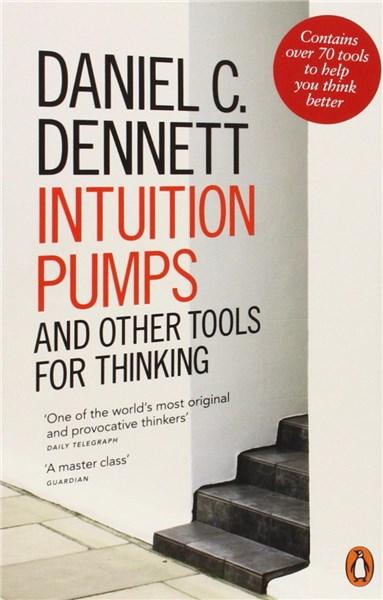
Intuition Pumps cover imageAccording to the English Wikipedia, Daniel Dennett (March 28, 1942 – April 19, 2024) “was an American philosopher and cognitive scientist. His research centered on the philosophy of mind, the philosophy of science, and the philosophy of biology, particularly as those fields relate to evolutionary biology and cognitive science.” Dennett was and remains well-known in atheist/freethinking/skeptical circles as one of the so-called “Four Horsemen” of New Atheism, alongside Richard Dawkins, Christopher Hitchens, and Sam Harris.

In this post I draw from Chapter 3 of Dennett’s book Intuition Pumps and Other Tools for Thinking (2013). The particular intuition pump, or tool in that chapter is what Dennett called “Rapoport’s Rules for Debate”. The Rules are Dennett’s suggestion for how to disagree with someone productively. In this article I’ll explore the practicality of the rules, and how one might apply them to John W. Loftus’ Outsider Test for Faith.

Dennett’s version of Rapoport’s Rules attracted considerable commentary, as this DDG Web search shows. Quoting from Dennett’s original version: 

January 14, 2025

Maha Kumbh 2025: The Story of Kumbh and Prayagraj

One of the world’s greatest religious spectacles is underway and the numbers are staggering! 400 million people are expected to be there! That's more than the population of the United States! Watch the video below. Believers at this festival worship different gods and are just as devout as the devotees of Christianity, Islam, or Judaism. Nothing is more destructive of one's own culturally indoctrinated religion than a different one. "If their religion is obviously false and its devotees delusional, then what about mine?" It's like meeting an antimatter twin!


Now is the time to take The Outsider Test for Faith! It challenges adults to doubt their own culturally indoctrinated childhood faith for perhaps the first time, as if they had never heard of that faith before. It calls on them to require of their own religious faith what they already require of the religious faiths that they reject. It forces them to rigorously demand logical consistency with their doctrines, along with sufficient evidence for their faith, just as they already demand of the religions that they reject.

December 27, 2024

Religions Thrive on Naïve Ignorance

But also on arrogant and aggressive ignorance


A few months ago, an elderly Catholic women admitted to me that their priests told them not to think about what they learned as children in catechism. But I suspect this is a common approach of clergy everywhere: “Just believe that we know what we’re talking about—after all, we learned all there is to know about god in seminary—and our intense prayers keep us in touch with him.” Especially when eternal life is at stake, why take chances? “Of course, our church, our denomination, has it right.”

December 25, 2024

Hail Mary! Was Virgin Mary Truly the Mother of God’s Son?

 Hail Mary! Was Virgin Mary Truly the Mother of God’s Son?

 -- By John W. Loftus

Catholic Christians pray the rosary, which is a string of beads representing creeds and prayers to be recited. Devout Catholics are considered to recite it every single day. In it the Apostles’ Creed made the cut, which is recited one time. The Glory Be (Doxology) is recited five times, the Lord’s Prayer is said six times, but the Hail Mary prayer is recited a whopping 150 times!   

 As one who was raised a Catholic I was required to recite these things a number of times upon visiting the confessional booth, depending on the gravity of my sins. While the Hail Mary can be dated back to the 13th century, the current prayer dates to the 16th century: 


Hail Mary, full of grace, the Lord is with thee; blessed art thou among women and blessed is the fruit of thy womb, Jesus. Holy Mary, Mother of God, pray for us sinners, now and at the hour of our death. Amen. 

Logistics and Mary the Mother of God.

We need to start by briefly considering some logistics. Consider first, the logistics of how a real mother named Mary could conceive of God (or God’s Son).

The ancients commonly believed that the woman contributes nothing to the physical being of the baby to be born. They thought the child was only related to the father. The mother was nothing but a receptacle for the male sperm, which grew to become a child.

Today, by contrast, with the advent of genetics, most Christian thinkers try to defend the virgin birth on the grounds that the humanity of Jesus was derived from Mary and that his divine nature was derived from God. They do this because they know something about genetics and know Mary must have contributed the female egg that made Jesus into a man. But this doesn’t adequately explain how Jesus is a human being, since for there to be a human being in the first place minimally requires that a human sperm penetrate a human egg. Until that happens we do not have the complete chromosomal structure required to have a human being.

Now of course, God could conceivably create both the human egg and the sperm from which to create life inside Mary’s womb. But if it’s a created human life then it’s not God, who is believed to be eternal, and the creator of everything, who came to suffer and die to atone for human sins as a sinless God. Other problems emerge when it comes to the supposed genealogies and fulfilled prophecies.

Nevertheless, what if God had a body? He did, didn’t he? Sure he did, even though later Christian theology describes God as a Spirit. God is described as walking and talking with Adam and Eve, who even tried to hide from him in the trees of the garden (Genesis 3:8-10). Later on, Jacob prevailed over God in an all night wrestling match, after which Jacob said, “I saw God face to face, and yet my life was spared.” God also let Moses see his body, even his backside (Exodus 33). After monotheism arrived God was still seen as having a body. He sat on a throne (Ezekiel 1; Daniel 7; Matthew 25:31; Revelation 5:1), and he rewarded the faithful by allowing them to see his face (Matthew 5:8; 18:11; Revelation 22:3-4). The first martyr Stephen saw Jesus “standing at the right hand of God” (Acts 7:56). Even at the end of times every eye will see him—and presumably recognize him—riding on a white horse to do battle with his enemies (Revelation 1:7; 19:11-21).[1]

So perhaps it isn’t too surprising Mormons still believe God has a body. But if so, they have to struggle with the virgin conception of Jesus. Was mother Mary a virgin or not? According to Brigham Young, the second president of the Church of Jesus Christ of Latter-day Saints, “The Father came down and begat Jesus, the same as we do now.” Mormon apostle Bruce McConkie agreed, saying, “Christ was begotten by an immortal Father in the same way that mortal men are begotten by mortal fathers.” Two Mormon researchers ask us if it “is so disgusting to suggest God sired a son by sexual intercourse?”[2] Inquiring minds want to know.[3] But if God’s son was produced the old-fashioned way, his son Jesus was not conceived of a virgin after all!

November 25, 2024

The Blasphemy of Heliocentrism

The Pareto distribution of bible verse citations

If you’ve listened to many church sermons, you may have noticed that they often cite verses from the church’s preferred translation of the bible, or allude to verses indirectly. If you were to write down all these verses, over time you’d build up quite the list. But you might need a lot of sermons before you could reconstruct an entire bible that way. That’s because many verses in the bible sound a bit problematic to modern ears, and don’t feature in a lot of sermons. Instead you might notice that your pastor is like a long-time touring musical act, well past its hitmaking heyday, which keeps on playing its hits. What people liked in the past, they can probably like again. A cynical or perhaps realistic observer might note that the most important skill for any church pastor is fundraising (“No bucks, no Buck Rogers”), and some bible verses work better than other verses for separating the marks I mean congregants from their money. Among the more successful pastors - in terms of attracting congregants and extracting money from them - we have Joel Osteen, whose preaching style, or so I’ve read, leans heavily into “uplifting” and away from “challenging.” Thus we wouldn’t expect to see successful pastors like Osteen engaging seriously and frequently with bible difficulties, as these seem to be bad for business.

March 03, 2024

Of Miracles: In Defense of David Hume against Graham Oppy

 David Hume (1711-1776) offered some good philosophical arguments against miracles that still resonate today. His arguments focused on the unreliability of human testimony on behalf of miracles. He did not live in a technological age like ours with modern forensics that include blood analysis, with tests that can determine one’s type, and detects diseases, poison, drugs and alcohol. We also have x-ray technology, DNA evidence, CAT scans, dash cams, and security cameras at convenience stores, on street intersections, and neighborhood homes. Especially noteworthy are the ubiquitous number of cell phones that give us immediate access to the police by a 911 call, cameras that can capture any event on video, and GPS tracking capability showing where we are at any given time. So Hume didn’t have the capability we do to establish miracles, or debunk them.

In our day the James Randi Educational Foundation (JREF) offered a one-million-dollar prize “to anyone who can show, under proper observing conditions, evidence of any paranormal, supernatural, or occult power or event.” From 1964, when it first offered such a challenge, until 2015 when they stopped doing it, no challenger had even gotten past the preliminary test.[1] That should settle the question of miracles. If not, why not?

One might ask why we even need philosophical arguments. Why not just teach how science works and why the methods of science are the best we have to get at the truth? In a real sense we don’t need philosophical arguments, per se, including those from Hume.[2] However, given so many possible existential threats to life on our planet, we should do everything we can to reach people who value blind faith over scientific evidence.[3] So practically speaking, some believers might be attentive to listen to Hume, rather than to Darwin, Sagan, Shermer, Dawkins and others.[4]

One of the best philosophical arguments that can help believers acknowledge the value of sufficient evidence, objective evidence, scientific evidence, is found in my book, the Outsider Test for Faith. [5] It challenges them to doubt their own culturally indoctrinated childhood faith for perhaps the first time, just as if they never heard of it before. It calls on them to require of their own religious faith what they already require of the religious faith’s they reject. It forces them to rigorously demand logical consistency with their doctrines along with sufficient evidence for their faith, just as they already demand of the religions they reject.

February 19, 2024

Faith and Reason are Mutually Exclusive Opposites

This is the conclusion I have come to. In my years of Blogging there is nothing I have written that elicits more of an adverse response from Christian believers than when I have denounced faith in favor of scientifically based reasoning. I can write against the resurrection, miracles, or the inspiration of the Bible, but when I write against faith the blog world lights up (well, those who read my blog anyway). Why? George H. Smith tells us in Atheism: The Case Against God: “In order to understand the nature of a philosophical conflict one must grasp the fundamental differences that give rise to the conflict.” True enough. Applied to debates between atheism and Christianity he identifies what it is: “The conflict between Christian theism and atheism is fundamentally a conflict between faith and reason. This, in epistemological terms, is the essence of the controversy. Reason and faith are opposites, two mutually exclusive terms: there is no reconciliation or common ground. Faith is belief without, or in spite of, reason.” (pp. 96-98) As such, “For the atheist, to embrace faith is to abandon reason.” (p. 100)

December 04, 2023

An Excerpt From Chapter 2, From "The Outsider Test for Faith", pp. 33-44

Chapter 2: The Fact of Religious Diversity

This chapter supports my first contention—that people who are located in distinct geographical areas around the globe overwhelmingly adopt and justify a wide diversity of mutually exclusive religious faiths due to their particular upbringing and shared cultural heritage. This is the Religious Diversity Thesis (RDVT), and it is a well-established fact in today’s world. The problem of religious diversity cries out for reasonable explanation, something that faith has not provided so far. Attempts to mitigate it or explain it, as we’ll see, either fail to take it seriously or explain religion itself away.

November 02, 2023

I've Written Three Books On How To Honestly Seek the Truth

[First Published August 2022] I've written three books to educate believers on how to honestly seek the truth and defend it: 1) The Outsider Test for Faith: How to Know Which Religion is True. In it I show honest believers how to approach their faith consistently without any double standards or special pleading.

2) How to Defend the Christian Faith: Advice from an Atheist. In it I show Christian apologists how to correctly defend their faith, if it can be defended at all. Apologists should read it before writing another sentence in defense of their faith. In it I challenge apologists to stop doing what they're doing if they're honest about defending their Christian faith. The risk is that if they stop it they cannot defend their faith at all. But the risk is worth it if they're serious about knowing and defending the truth.

3) Unapologetic: Why Philosophy of Religion Must End. In it I show philosophers of religion and other intellectuals how to properly discuss and debate religious beliefs. What I cannot teach however, is to desire the truth. That comes from within. Taken together these three books are the antidote to the faith virus. The problem is almost none of them desire the truth, comparatively speaking. Here's hoping a few honest believers are reading who desire the truth.

October 31, 2023

Which Atheist Books Do I Recommend?

Having previously linked to some reasons why philosophical apologetics is not changing very many minds, especially the most sophisticated philosophy that every serious philosophical apologist loves to recommend, because it says that they understand it! Congrats to you!! A lot of it is obtuse and obfuscationist though. As it's practiced today, it isn't that helpful if one wants to change minds. After all, the more sophisticated that philosophy is, the more sophisticated the reader is. At that level it doesn't change the minds of sophisticated readers because they are already entrenched in what they think. It also has a way of being turned around as a pat on the back! Just see how William Lane Craig responds to a very detailed and knowledgeable question about philosophical apologetics at his website, Reasonable Faith. Craig wrote:
I include your question here for the instruction and encouragement of our Reasonable Faith readers. You have masterfully surveyed for us the current philosophical landscape with respect to atheism. You give our readers a good idea of who the principal players are today.

I hope that theists, especially Christian theists, who read your account will come away encouraged by the way Christian philosophers are being taken seriously by their secular colleagues today.

The average man in the street may get the impression from social media that Christians are intellectual losers who are not taken seriously by secular thinkers. Your letter explodes that stereotype. It shows that Christians are ready and able to compete with their secular colleagues on the academic playing field.
To see this you need to read my book Unapologetic: Why Philosophy of Religion Must End. This is the first book I'm recommending, with others to follow below. If nothing else, consider the recommendation of atheist philosopher Nick Trakakis, co-editor with Graham Oppy of several important philosophy of religion books, and the author of his own book on The End of Philosophy of Religion, plus The God Beyond Belief: In Defense of William Rowe's Evidential Argument from Evil. He even wrote a chapter in my book, God and Horrendous Suffering. He said this of my book Unapologetic:
I am in wholehearted agreement with you. I actually find it very sad to see a discipline (the philosophy of religion) I have cherished for many years being debased and distorted by so-called Christian philosophers. Like you, I have now finally and happily found my place in the atheist community. I’m slowly making my way through your "Unapologetic book", it’s quite fascinating, loving the Nietzschean hammer style.

October 13, 2023

A Mighty Fortress Is Their Faith: Protecting Ancient Superstitions

“…an utterly wrongheaded approach to their faith…”


About ten years ago, when was I writing drafts of chapters that would be part of my 2016 book, Ten Tough Problems in Christian Thought and Belief, I asked a few Christian friends to read and critique what I’d written. They all refused, except for one Catholic woman—showing more courage than the others—who seems to have learned something from my chapter on the gospels: “I didn’t know Jesus was supposed to come back.” I was not surprised, since so many Catholics have told me they were never encouraged to read the gospels. Another Catholic woman who refused my request was honest about her reason: she embraced her faith passionately because she is eager to see her mother again in heaven—and she wanted nothing to jeopardize that. One Protestant admitted that he worked hard to keep his faith intact, and was reluctant to read anything that might fuel his doubts.

June 30, 2023

The Morale of Christian Clergy Is Taking a Big Hit

No surprise, given the mess their religion is in


1.     Christians can’t agree on who is right, what god wants


When Christians are off to church on a Sunday morning, they might have to drive past a few churches of other denominations. Apparently it never crosses their minds to stop at one of these—after all, “We’re all Christians, aren’t we?” But that’s exactly the problem: Christians have never been able to agree on what Christianity is. They’ve been fighting about this for centuries; the Catholic/Protestant divide is especially pronounced. We can be sure Catholics won’t stop at Protestant churches, and Protestants—with contempt and ridicule for the Vatican—wouldn’t think of stopping at a Catholic church.

June 09, 2023

Seeking to Confirm One's Faith is the Worst Method for Determining Which Religion is True, if There is One.

A Muslim named Bishr Nayal is commenting here at DC, which I welcome. He quoted Quran 30:58 which reads, "In the Qur'an We have explained things to people in myriad ways. But no matter what Sign you bring to them, those who are resolved upon denying the Truth will say: 'You are given to falsehood." But this quote can be used to say other believers in different sects within Islam are wrong too. Nayal, you are seeking to confirm your faith. Almost anyone can do that. Given the prolific number of religions and sects on the planet, you know that they do it. Yet you're doing the same thing! This is the worst method for determining which religion is true, if there is one.

I've written a book for you. It's called, "The Outsider Test for Faith." Read it. If you choose not to do so, then at this point you are not interested in knowing if your religious faith is true. It can be found here on Amazon. Go ahead. What have you got to lose? It's about methodology.

One thing is sure, whether your read my book or not, seeking to confirm one's faith is emphatically NOT the way to know if your religion is true. It's a known cognitive bias. Agreed? If not, why not? See this explained with regard to St. Anselm. Okay, now read the introduction to my book, to whet your appetite.

June 02, 2023

Daniel Mocsny, On The Need Not to Test One's Faith Lest it Fails

A lot of intelligent and thoughtful people comment here at DC. On this thread Daniel Mocsny offers a good comment. He responded to an aspiring apologist named David Pallmann, who has probably not seriously considered any alternative religion given his education. [See Pic] He said, "John W. Loftus hardly. We all try to rationalize our own belief systems first and seldom try to rationalize belief systems which we seldom (if ever) encounter. That's not a double standard."